Astrology Timing for Marriage Explained
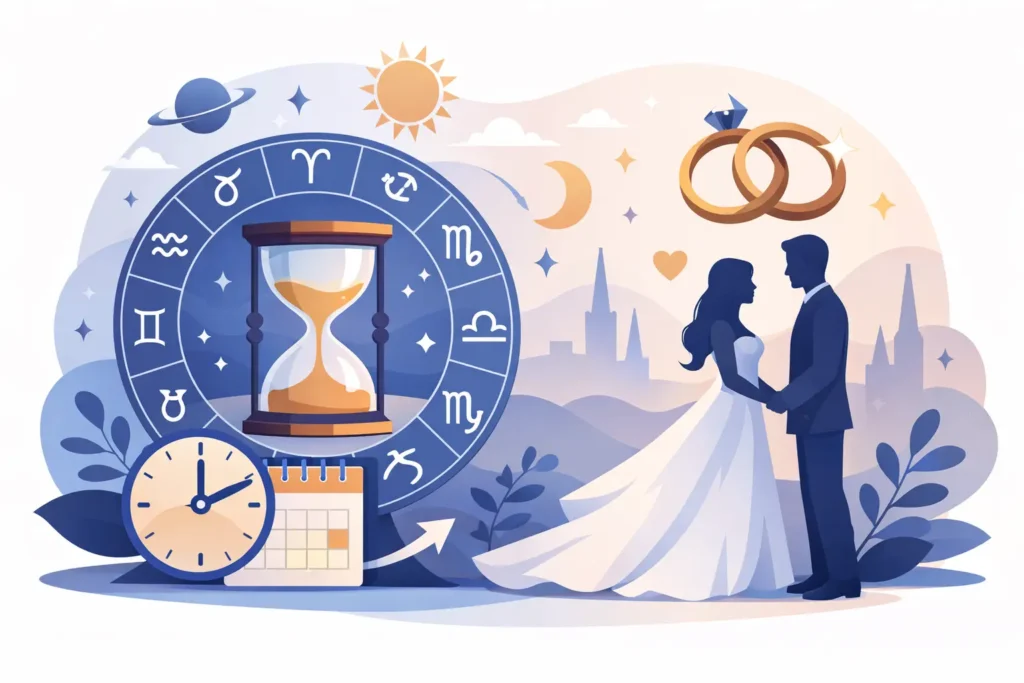
When someone asks about astrology timing for marriage, they are rarely asking for a date alone. More often, they want to know whether a relationship is moving toward commitment, whether delays mean denial, or whether their life is aligned for partnership at all. That is why timing work needs to be handled with care. A useful reading should bring clarity, not pressure.
Marriage timing is one of the most requested topics in astrology because it sits at the meeting point of emotion and decision-making. People want reassurance, but they also need honesty. A responsible astrologer does not force certainty where the chart shows complexity. Instead, the chart is read for patterns, periods of support, and the conditions that make commitment more likely.
What astrology timing for marriage actually looks at
A sound marriage timing assessment is not based on one placement or one transit. It looks at relationship promise in the birth chart first, then examines when that promise is activated. Without that first step, timing can become vague or misleading.
In practical terms, astrologers usually study the 7th house, its ruler, Venus, Jupiter, and the Moon, along with indicators of commitment, family life, and partnership maturity. In systems such as KP astrology, timing becomes more precise by examining house significations, stellar divisions, and ruling periods. This is part of what makes timing work feel more structured than generic sun-sign astrology.
That said, even in a technical system, marriage is not reduced to one single factor. The chart may show strong relationship potential but delayed formal commitment. It may show marriage after emotional healing, after relocation, or after career stabilization. Timing is rarely isolated from the rest of a person’s life.
Why marriage timing is never just about a wedding date
People often come to astrology hoping for a fixed answer – the month, the year, the exact age. Sometimes the chart does support a narrow timeframe. Often, what emerges is a window rather than a deadline.
That distinction matters. A window suggests increased likelihood, not a guarantee. During a favorable period, someone may meet a serious partner, reconcile with someone important, become engaged, or make a clear internal decision about commitment. For another person, the same kind of period may bring marriage discussions that eventually lead to a ceremony later.
This is one reason ethical astrology timing for marriage should never be used to frighten someone about “missing” their chance. Human lives are not that fragile. Timing shows momentum, openings, and developmental phases. It does not replace consent, compatibility, or personal readiness.
The difference between delay and denial
One of the most emotionally charged concerns in marriage readings is delay. Many people have already faced family pressure, previous heartbreak, or the quiet fear that everyone else is moving faster. A chart with delay signatures can feel discouraging if it is delivered carelessly.
But delay is not the same as denial. In astrology, delay often points to a slower maturation process around partnership. This can come from Saturn influences, demanding career cycles, karmic relationship lessons, or the need to learn discernment before making a lasting commitment.
In real life, delayed marriage can coincide with better outcomes. Someone who marries later may choose more wisely, communicate more clearly, or avoid repeating unstable patterns. Timing is not a moral judgment. It is simply a reflection of how a life unfolds.
This is where grounded guidance matters. The question is not only “When will I marry?” but also “What is being developed in me before marriage becomes sustainable?” That shift tends to reduce anxiety and bring the reading back into useful territory.
How astrologers narrow marriage periods
When astrologers time marriage, they usually look for overlap. A single transit is rarely enough. Stronger indications come when multiple timing factors point to partnership at once.
Those factors may include supportive planetary periods, activation of the 7th house or its ruler, transits involving Venus or Jupiter, progressions that emphasize emotional commitment, or KP indicators connected to houses linked with union and family life. The broader chart context also matters. A favorable marriage period landing in the middle of intense personal upheaval may express differently than the same period in a stable season of life.
This is why two people with similar relationship transits can have very different outcomes. One is available, healed, and in a serious partnership. The other is still closing an old chapter or avoiding commitment altogether. Astrology marks time, but people still meet that time through choice and circumstance.
What a good marriage timing reading should tell you
A useful reading should offer more than prediction. It should help you understand the quality of the period you are in.
For example, are you in a window that supports meeting someone significant, formalizing an existing bond, or clarifying whether a current relationship can move forward? Is the chart showing progress but with practical obstacles such as family concerns, distance, legal issues, or emotional hesitation? These details matter more than dramatic certainty.
A good reading should also be honest about timing that is mixed. Some periods bring relationship growth but not necessarily marriage. Some support romance but not stability. Others are excellent for long-term commitment, but only if the relationship itself is healthy. Astrology can indicate readiness for union. It cannot make an unsuitable relationship become sound.
Common misunderstandings about astrology timing for marriage
One common misunderstanding is the belief that everyone has one fixed marriage date hidden in the chart. Most charts do not work that way. They show probable periods, not a single fated afternoon.
Another misunderstanding is assuming that difficult timing means permanent loss. Challenging periods may delay action, expose incompatibility, or require patience. That can be disappointing, but it is often protective.
There is also the belief that if a chart shows marriage potential, any current partner must be the one. Not necessarily. The chart may describe the timing of commitment without identifying the person in advance. This is why astrologers need to stay careful and measured, especially when clients are emotionally invested.
When to seek a marriage timing reading
Marriage timing readings are most helpful when a real question exists. If you are in a serious relationship and wondering whether commitment is likely, timing can clarify the period ahead. If you are single and concerned about repeated delays, timing can help identify when relationship momentum improves. If you are facing family pressure or a cross-cultural match with logistical complications, timing can also show whether the relationship is moving toward formalization or stalling.
The reading is less useful when approached as a substitute for communication. If someone refuses commitment, gives inconsistent signals, or avoids practical steps entirely, astrology should not be used to explain away that behavior. Timing can support discernment, but it should not encourage denial.
A grounded way to use the insight
The healthiest way to approach marriage timing is to treat it as decision support. If your chart shows a favorable relationship period, use that knowledge well. Be available. Have honest conversations. Notice whether your actions align with the life you say you want.
If the chart shows delay, do not turn that into hopelessness. Use the time intelligently. Strengthen your standards, emotional clarity, and practical readiness. In many cases, the period before marriage is not empty space. It is preparation.
This is also why a structured consultation matters. In a practice such as Ask Kay, the goal is not fear-based messaging or dependency. The goal is calm clarity – enough insight to help you make grounded decisions without handing your agency over to prediction.
Marriage is a life event, but it is also a relationship process. Astrology can help with timing, especially when read carefully and ethically. What it offers at its best is not pressure to chase a date, but perspective on when commitment is more likely to take root.
If you are asking about marriage timing, the deeper question may be whether your life is moving toward stable partnership in a real and sustainable way. That is the question worth answering well.